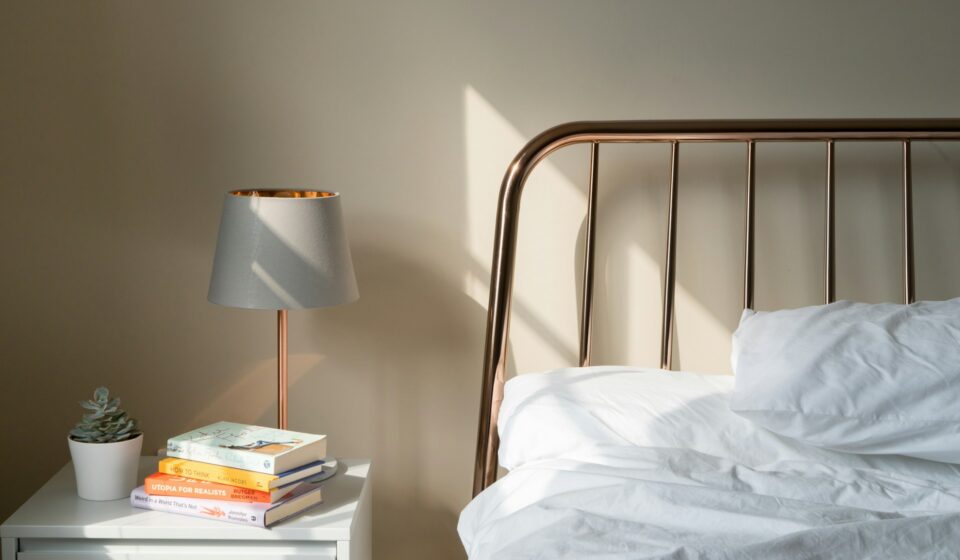
You walk into a room and something shifts. Your shoulders drop. You feel like you can settle.
Then you walk into another space and the opposite happens. Your mind speeds up. You want to leave.
The difference is rarely about how expensive the furniture is. It’s about visual, sensory, and functional qualities working quietly in the background.
Why Some Rooms Feel Easier to Be In
Some rooms let your attention settle. Others keep pulling your focus in ten directions.
This has nothing to do with minimalism or perfectly styled interiors. A calm room can have books on the shelves, dishes in the sink, a blanket draped over the couch.
Sit down to read. Your eyes catch on the pile of mail. Then the half-finished project on the side table. Then something else that doesn’t have a place. You’re not thinking about any of it directly, but somehow the room keeps reminding you.
A room feels different when most of what you see makes sense where it is. The coffee table holds a few things you actually use. The counter has what you need for breakfast. The floor is mostly clear. You look up from your book and your attention doesn’t snag on anything.
Spend an hour in some rooms and you come out more tired than when you walked in. Others let you recharge without noticing it happened.
How Your Environment Shapes What You Feel
Calm isn’t just what you see. It’s what you hear, what you touch, how the light moves.
Walk into a room that only has overhead lighting. Then walk into one with windows. Something fundamental shifts, even if you can’t name what it is.
The morning sun hits the table at an angle. That side of the room feels warmer, even though the temperature hasn’t changed. By late afternoon the light has shifted completely. Soft and golden instead of bright and direct.
Your hand rests on a wooden table while you’re reading. You don’t think about the texture. But if someone replaced it with glass tomorrow, you’d feel the difference immediately.
Some rooms absorb sound. Conversations feel muffled, gentle. Other rooms bounce every noise back. The same conversation, but sharper somehow. Harder to relax into.
Someone puts a plant on the corner of your desk and suddenly that whole side of the room feels different. More alive, though nothing else changed.
You sidestep the chair every time you cross the room. It’s not in the way, exactly. Just not quite out of the way either. That small friction adds up over a day, a week, a month.
The first time you’re in someone’s space, your brain is working. Mapping distances. Locating the bathroom. Figuring out where to sit. A month later, in your own place, none of that happens. Your body moves without thinking.
Why Calm Looks Different for Everyone
What feels calm to you might make someone else restless. What relaxes them might feel wrong to you.
Some people need a room that’s mostly empty to feel settled. Others need their favorite books visible, photos on the wall, objects that mean something. Neither is right. The question is just whether the space fits the person in it.
Visit someone else’s home and their version of calm looks nothing like yours. Their kitchen counter is covered with appliances they use daily. Yours is clear except for a coffee maker. Both of you feel more relaxed in your own setup.
Someone who wakes up slow needs the bedroom dim and quiet. Someone who wakes up ready to go wants light and space to move. Same room. Completely different setup. Both versions of calm.
Spend your days in a busy office surrounded by noise, and coming home to a quiet, simple space feels necessary. Work from home in silence all day, and you might need your living room to feel more alive.
A room reminds you of a place where you felt happy. It feels calmer than one that doesn’t. This is why some people relax most in spaces that echo their childhood home, while others need something completely different.
Firm couch or soft cushions. Bright light or dim. Windows open or closed. What settles one person makes another restless.
What Calm Actually Requires
Calm happens when the visual noise drops low enough that your mind stops scanning for what’s next. When your senses aren’t being asked to process more than they need to. When moving through your day doesn’t require navigating small obstacles you’ve stopped consciously noticing but still feel.
Light that shifts with the time of day. Surfaces that feel good under your hands. A path through the room that makes sense. Things that belong because you use them or because they mean something. When these align, the room stops competing for your attention.
The calmest rooms aren’t the ones that look perfect. They’re the ones where you can just be, without the space asking for your attention.
This article is part of the Home & Garden category, where living spaces, home environments, and everyday routines around the home are explored.