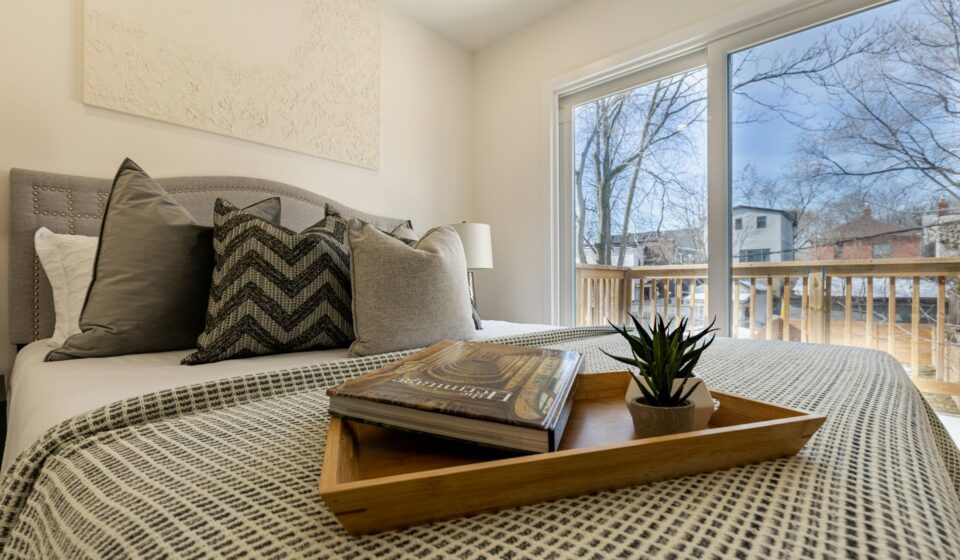
You walk into a room and something shifts. The space either feels settled or it doesn’t. You notice it in your shoulders, in how quickly you can let your mind rest, in whether your attention can soften or if it keeps snagging on small things scattered across your view.
Most people assume that creating a calmer space requires a major overhaul. A weekend spent decluttering. New furniture. A complete aesthetic reset. The kind of transformation that shows up in before-and-after photos.
But the rooms that feel easiest to be in are often the result of small adjustments, not dramatic makeovers. A few targeted changes can shift how a space feels more than redoing the entire thing.
The goal is not perfection. It’s creating a room that feels calmer to be in, one that doesn’t demand constant mental management so you can actually rest, focus, or just exist without your attention being pulled in multiple directions.
When Your Eyes Keep Catching on the Same Things
Some objects in a room demand more attention than others. Not because they’re inherently distracting, but because they keep pulling your focus throughout the day.
The pile of mail that’s been sitting on the counter for a week. The chair in the bedroom that’s become a landing spot for clothes. The charging cables sprawled across the nightstand. The stack of magazines on the coffee table you keep meaning to deal with.
You walk into the kitchen and your eyes go straight to the cluster of things by the sink that never quite get put away. Or you’re trying to relax on the couch but keep noticing the cabinet door that won’t close all the way because something inside is jammed at an angle.
These aren’t necessarily clutter in the traditional sense. They’re just things that your eyes land on repeatedly, and each time they do, your brain registers them as something unfinished or out of place.
You don’t need to address everything at once. Often, dealing with just a few high-notice areas creates more relief than trying to organize an entire room.
The question is not “Is this item serving a purpose?” but rather “Does this repeatedly catch my attention in a way that won’t let me move on?”
Sometimes the answer is to move something out of sight. Sometimes it’s finding a designated spot so the item has somewhere to land that feels intentional rather than temporary. Sometimes it’s just putting the thing away, not because it’s wrong to leave things out, but because this particular thing has been quietly bothering you for longer than you realized.
How You Actually Move Through the Room
Room layout affects more than aesthetics. It shapes how you experience the space every single day.
You notice it when you have to edge around the bed to reach the closet every morning. When you can’t quite settle into a chair because the lighting is wrong for reading. When the things you use every day are stored behind the things you use twice a year.
These small obstacles add up. You might not consciously register each one, but you notice you spend less time in the room. Or you sit down and immediately get back up. Or you start getting ready in a different room because navigating the layout has become quietly annoying.
The calmest spaces are often the ones where daily routines don’t require navigation or problem-solving. They account for how you really move through your day, not how you wish you moved through it.
If you always drop your keys in the same spot when you walk in, that spot probably needs a hook or a dish. If you’re constantly setting your phone on the arm of the couch because there’s nowhere else within reach, the side table might be positioned wrong. If you avoid the living room in the morning because the curtains make it too dark and you’d have to walk across the room to open them, the layout is working against you.
A calmer room is not about creating a showroom. It’s about noticing where your routines bump up against your environment and making small adjustments so the space feels easier to inhabit.
Sometimes this means moving a piece of furniture six inches. Sometimes it means swapping which drawer holds what. Sometimes it means admitting that the cute decorative bowl is not actually helping and replacing it with something more functional.
What Helps You Actually Settle
Creating calm is not just about removing things. It’s also about what you add back in.
You realize you only sit in certain spots in your home. The chair by the window where the light is good. The corner of the couch where you can lean against the armrest. The kitchen stool where your feet can actually touch the floor.
You avoid other spots for reasons you don’t always articulate. The chair that looks comfortable but makes you tense within minutes. The side of the table where you’re facing the wall. The seat where the overhead light shines directly in your eyes. These aren’t small preferences. They’re the difference between a space that feels restful and a space that keeps your body on alert.
Sometimes calm comes from adding something that lets you settle. A blanket that’s actually soft, not just decorative. A side table where you can set down a drink without stretching. A lamp that provides gentle light instead of making the whole room feel harsh.
You notice you reach for the same mug every morning because the handle fits your hand right, which is a small thing that makes the morning feel less effortful. Or you gravitate toward one specific pillow because the others never let your neck fully relax. Or you realize you’ve been avoiding the living room after dinner not because you don’t want to sit, but because getting comfortable there requires too much adjustment.
These aren’t abstract preferences. They’re physical realities that shape whether a room feels restful or draining. A calmer space often comes from adding the specific things that let your body actually relax, not from following someone else’s idea of what calm should look like.
Sometimes a room feels agitating because it’s missing something foundational. You can’t get comfortable in any position because every seating option keeps you slightly tense. The lighting never feels right. There’s nowhere to set things down without them being in the way. The room might look fine, but something about being in it prevents you from fully settling.
When the Space Feels Different
You notice something that keeps catching your attention and you deal with it. You realize a piece of furniture is positioned wrong for how you actually use the room and you shift it. You add something that makes it easier to settle in.
Sometimes the shift happens immediately. Sometimes it takes a week before you notice you’re not avoiding the room anymore.
Calmer spaces are usually the result of small, ongoing adjustments rather than single dramatic transformations. You live in the room for a while. You notice what’s not working. You change it. Then you notice something else.
The difference shows up in how the space feels. You find yourself choosing the living room more because you finally moved the lamp to where the light doesn’t strain your eyes. You stop avoiding the bedroom in the afternoon because you dealt with the glare. You can have people over without the space feeling like it needs explanation or last-minute correction.
The goal is not a perfect room. It’s a room that feels calmer to be in. One where you can rest without your attention constantly snagging, or where moving through your day doesn’t require constant small adjustments.
The room becomes easier to rest in, easier to think in, easier to simply be in. Not because everything is in its place, but because the space has stopped working against your need for calm.
This article is part of the Home & Garden category, where living spaces, home environments, and everyday routines around the home are explored.